 |
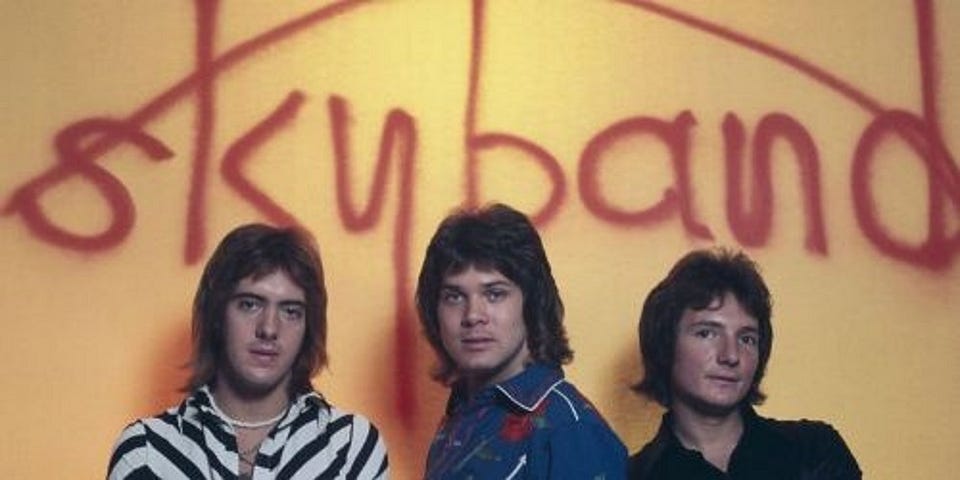
Skyband: Peter Beckett, Lane Caudell, and Steve Kipner. |
A mere two years after graduating from Asheboro High School in North Carolina, Lane Caudell scored his first recording contract at the age of 20, with Capitol Records issuing his debut single, “Let Our Love Ride” b/w “You, Him & Her” (July 1972), along with the sophomore effort, “Play On, Play On” b/w “And Then We Danced” (January 1973). Caudell’s labelmate was fellow “teen idol” Rick Springfield. Sadly, even with the full court press of the worldwide teen magazine industry behind Lane, his singles failed to set the retail and radio world on fire. A David Cassidy rise to fame was not forthcoming . . . nor a delayed rise, as in the case of Rick Springfield.
Next for Lane Caudell was a 1973 deal with the RCA Records-connected Metromedia Records. Once again: His labelmate was another chart-topping teen idol, one who benefited from a guest appearance on television’s The Partridge Family: Bobby Sherman. Their deals both went under when the label filed for bankruptcy not long after Caudell’s single was issued.
Meanwhile, over in Australia, another young, up-and-coming singer-songwriter named Peter Beckett auditioned for the Beatles-inspired Badfinger — then hot with their Paul McCartney-penned worldwide smash “Come and Get It” — but he lost the coveted gig to Joey Molland.
By 1974, Lane Caudell and Peter Beckett, along with Steve Kipner from another of Beckett’s bands, Tin Tin, formed a new musical concern. Under the management of ex-the Grass Roots founder Warren Entner and backing from Elvis Presley’s old label, RCA Records, now known as Skyband, the trio toured as the opening act for the Jackson 5 and issued their one and only self-titled album in 1975.
By that point, and as with Rick Springfield and Kim Milford (who eschewed the “teen idol” marketing for his early career): Lane Caudell begun studying acting. Meanwhile, Reed Kailing from the Grass Roots replaced him in Skyband; with a few more roster changes, the band transformed into Player, which scored a U.S #1 with “Baby Come Back.”
Lane Caudell made his film debut as a supporting actor in the exploitation teen-horror, Satan Cheerleaders (1977); starring-roles proper followed with Goodbye, Franklin High, and the rock ’n’ roll follow up, Hanging on a Star. (1978). Both films, backed by the Great Lion of Hollywood: MGM Studios, featured his music, with the latter film — his solo album debut — producing a soundtrack album. MCA financed a second, non-charting album, Midnight Hunter (1979).
In his non-rock ’n’ roll life: Lane Caudell appeared on several U.S television nighttime series and daytime dramas as he transitioned into a full time career as a songwriter, music publisher, and session musician in the country music marketplace.


No comments:
Post a Comment