Tuesday, July 22, 2025

Fotomaker with “Where Have You Been All My Life,” 1978

As with our earlier post on the Coup . . . Fotomaker has a late ’60s and early ’70s past to discuss . . . that includes actor Joe Pesci!

Felix Cavaliere, later of the chart-topping, U.S hit makers, the Young Rascals, and then, the Rascals, got his start with Joey Dee & the Starlighters, which served as the house band at New York’s famed Peppermint Lounge. After his stint with Joey Dee: Cavaliere formed the Young Rascals with Gene Cornish, Eddie Brigati, and Dino Danelli. (The Starlighters at one time featured Joe Pesci; without Pesci: they starred in the 1961 rock flick, Hey, Let’s Twist!)
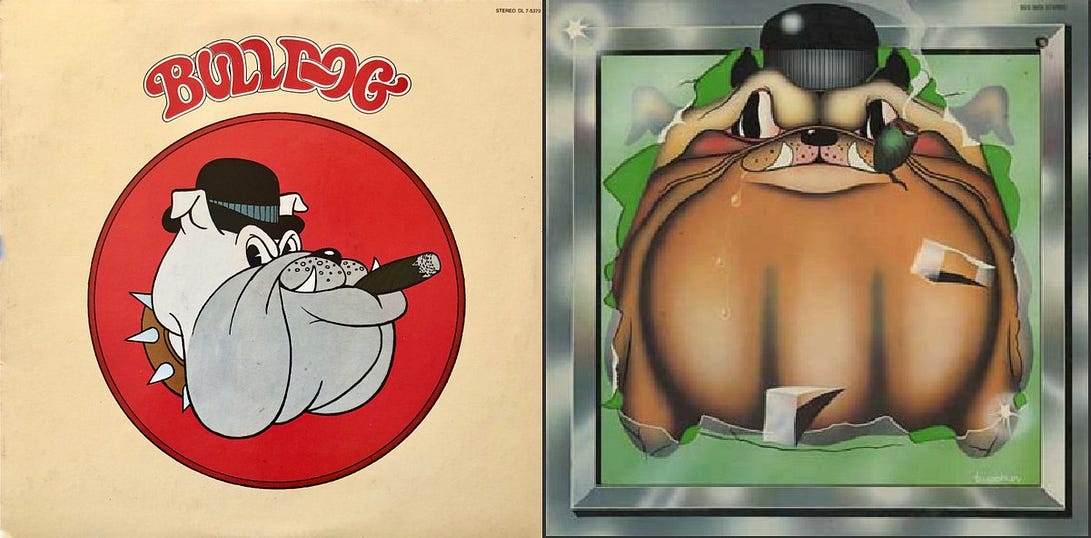
The two album career of Bulldog on Decca/MCA and Buddah Records.
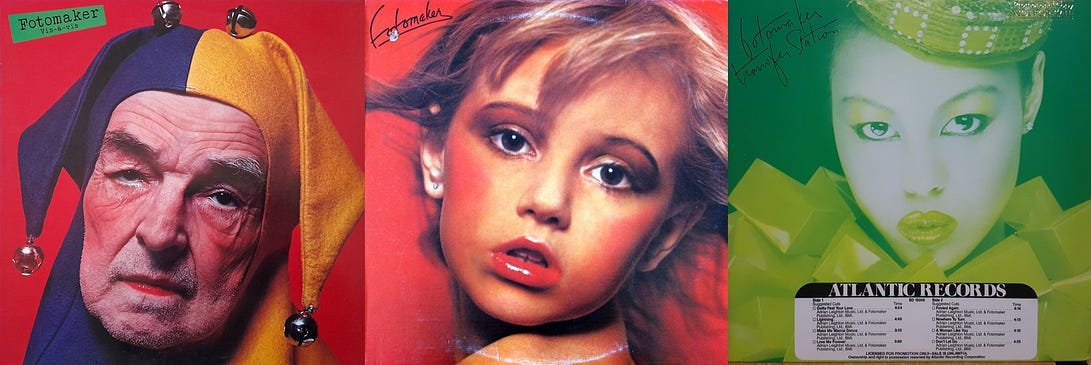
The three-album career of Fotomaker on Atlantic Records.


After the worldwide chart-topping years of the Rascals were over, the group, with vocalist/guitarist Gene Cornish and drummer Dino Danelli at the helm, evolved into the harder-rocking Bulldog. Issuing two radio and retail ignored albums (Decca and Buddah) in the early ’70s, Cornish and Danelli teamed with Wally Bryson, formerly with the early ’70s chart-topping, “power-pop” pioneers, the Raspberries. Their new concern was the new-wave-inspired Fotomaker, which lasted from 1977 to 1980.

Fotomaker issued three albums in the new-wave era: Fotomaker, Vis-à-vis, and Transfer Station in which a Cars or Knack-like success wasn’t meant to be: even with their great, lone U.S “Top 40” charting single, “Where Have You Been All My Life.”
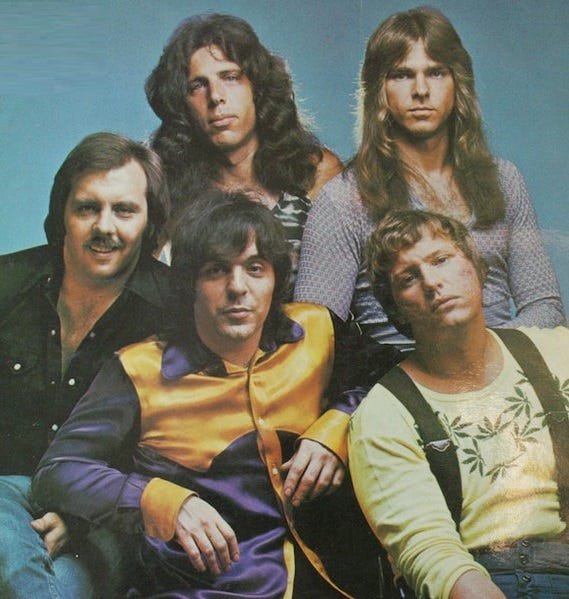
Bulldog (left to right): Gene Cornish (mustache),
Dino Danelli (yellow/blue shirt), with Eric Thorngren,
John Turi and William Hocher. Image: From the debut album.

Eric Thorngren, John Turi, and William Hocher became Pepper, which released a lone, self-titled pop-rock album on RCA Records in 1977.
John Turi was also a member of Blue Angel — the band of the solo-bound Cyndi Lauper — which issued one album on Polydor in 1980. Turi got his start in the late ’60s with Decca Recording artists, Fuzzy Bunny.


While Fotomaker was going on: Felix Cavaliere — who once played with Joey Dee, mind you — formed Treasure: a hard-rock, AOR-trio that issued an album in 1977 (Epic Records) that featured Vinnie “Vincent” Cusano, later of Kiss, on lead guitar.

Dino Danelli reappeared on the scene in the more-chart/video-single successful Little Steven and the Disciples of Soul in a rhythm section alongside ex-the Plasmatics bassist, Jean Beauvior.

After the Raspberries, and before Fotomaker: Ex-’Berry Wally Bryson formed the hard-rock outfit Tattoo with Thom Mooney. Mooney himself did time in Todd Rundgren’s the Nazz; then the Cheap Trick precursor, Sick Man of Europe. Tattoo managed one album in 1976 on Prodigal Records (a Motown subsidiary).

However, prior to those musical adventures: Thom Mooney did time in Fuse: the first recording band (on Epic Records) of Rick Neilson and Tom Petersson, both later of Cheap Trick. The drummer in Fuse was Chip Greenman. Upon turning down an offer to join the nascent Cheap Trick, he joined the power-pop concern the Names. That band’s claim to fame was doubling as the faux metal band the Clowns in the horror film, Terror on Tour (1980). Cheap Trick introduced themselves to the world as part of their soundtrack effort, Over the Edge (1978).

Yes, we are in agreement: The cover of Fotomaker’s second album — the one that contained their lone “Top 40” hit — is as uncomfortable to look at as it is creepy. No wonder their career tanked. Then again, Foreigner got away with the offensive cover for their fourth album, Head Games. (Sorry, Lou: we’re not buying the “joke” of the cover.) Then there’s the original European covers of the Scorpion’s early albums, Virgin Killer, and Lovedrive — the latter with its bubblegum-on-the-breast cover (that I bought for a dollar at my local library’s book and video swap: held in the same conference room where they hosted kids’ reading programs and puppet shows).

The art departments of record company knew how to sell . . . or not . . . albums back in the day!

Tuesday, July 15, 2025

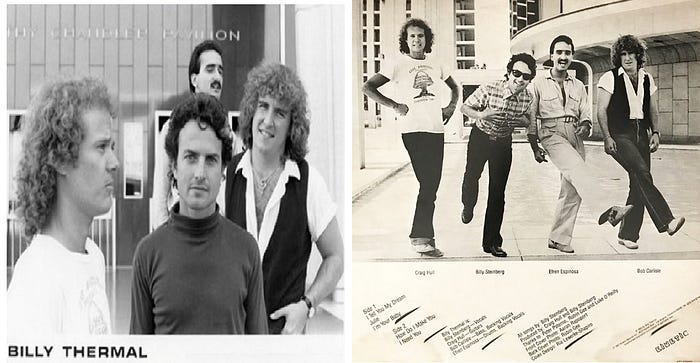
Billy Steinberg with Billy Thermal and “I'm Gonna Follow You”

The lone, never-released album by Billy Thermal 
reissued in the years-after-the-fact digital age.


While the Plimsouls became Planet Records’ bread-and-butter with their MTV new-wave favorite, “A Million Miles Away,” (no, they didn’t do “Everywhere I’m Not,” that was Translator; no, they didn’t do “Chamber of Hellos,” that was Wire Train) no one remembers, or even heard of, their labelmates: Billy Thermal. (And if we are keeping track: Wire Train hailed from San Francisco and became labelmates on 415/Columbia Records with Romeo Void (“Never Say Never”) and Pearl Harbour and the Explosions (“Drivin’”) . . . no, “Tell that Girl to Shut Up” was Holly and the Italians out of Los Angeles on Epic, not Romeo Void.

Anyway, as with David Werner: Billy Thermal got their greatest exposure through another $1.00 cut-out bin compilation we bought: Sharp Cuts, issued by Planet Records. Also featured on the album was the MTV-era Single Bullet Theory with their new-wave favorite, “Keep It Tight.” (Yeah, we all bought one to go with that nifty Rock 80 compilation from CBS that had that featured David Werner.)


Regardless of Billy Thermal’s chilly reception: Steinberg’s “I’m Gonna Follow You” and “Precious Time,” which he wrote and sang lead vocals for on the band’s lone, unreleased album, became hit singles on Pat Benatar’s early ’80s albums. Even Linda Ronstadt knew a good album when she heard one: she had a new-wave hit with the band’s “How Do I Make You.”

Other songs in Billy Steinberg’s post-Billy Thermal catalog include Pat Benatar’s “Sex as a Weapon,” as well as songs for Cyndi Lauper and Whitney Houston, “Alone” by Heart, Madonna’s “Like a Virgin,” and the Divinyls with “I Touch Myself.”

Billy Thermal’s bassist Bob Carlisle returned to the charts in 1997 with the worldwide Christian and secular crossover smash, “Butterfly Kisses.” Lead guitarist Craig Hull transitioned to a studio and recording career with Kim Carnes, Peter Cetera, Journey’s Steve Perry, and Dwight Twilley.

Musicians are lucky — and happy — if they get one hit single on their album, let alone three. And Billy Thermal died on the vine (the name is inspired by grape harvesting and wine making). Imagine the albums the band could have produced: they’d be bigger than the Beatles.

Billy Steinberg came to form a successful songwriting partnership with Tom Kelly, formerly with Dan Fogelberg’s late ’70s backup band, as well as a satellite member of Toto, touring and recording with the band into the late ’80s. Kelly’s songwriting prowess first entered the charts with Pat Benatar’s “Fire and Ice.” Together, as i-Ten (sometimes misnamed as I-10), the duo recorded the AOR-inflected album, Taking a Cold Look (1983), which featured their version of “Alone” made famous by Heart and Celine Dion.

Speaking (more) of Pat Benatar: The original singer behind Pat’s first and biggest hit — the one that eclipsed David Werner on the charts — Jenny Darren, who cut the original version on her 1978 album Queen of Fools, faded into obscurity . . . but we remember her, and Billy Thermal.


Tuesday, July 8, 2025

Doug Lubahn and Riff Raff with "Treat Me Right," 1981

The six-album career of Doug Lubahn with the bands
Clear Light, Dreams, Pierce Arrow, and Riff Raff.

Fans of the Doors know Doug Lubahn as the Doors’ session bassist who turned down an offer to join the Doors as an official, full-time member.

He came into his gig with the Doors — appearing on the albums Strange Days (1967), Waiting for the Sun (1968), and The Soft Parade (1969) by way of his band Clear Light — which featured future film and television actor Cliff DeYoung as lead vocalist and drummer Dennis Taylor, later of Crosby, Stills & Nash — touring with the Doors, Jimi Hendrix, and Janis Joplin. Formed in 1966 and formerly known as Brain Train, they changed their name to Clear Light when Elektra Records released their lone album in 1967 — produced by Paul Rothchild who also produced the Doors.

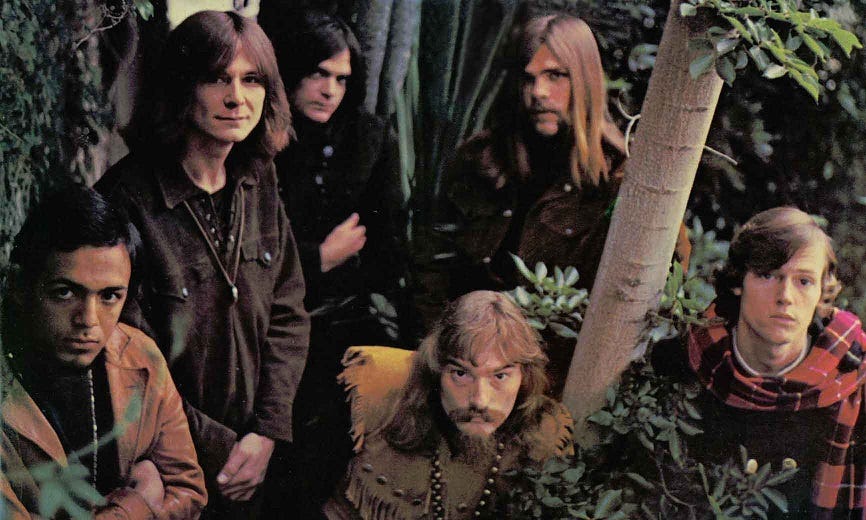
Clear Light: Clockwise (from left): Doug Lubahn, Bob Seal, Dallas Taylor,
Michael Ney, Cliff De Young (back, with long hair and mustache)
and Robbie Robison (red plaid shirt). Photo: From the album.

Recording two albums for Columbia Records as the trendier jazz rock-collective, Dreams, from 1969 to 1970 (the eventual home to the jazz rock-inflected Journey), Doug Lubahn recorded two chart-ignored albums with drummer Bobby Chouinard as the Eagles-inspired country rockers Pierce Arrow. Dreams featured bassist Will Lee, known for his tenure with The World’s Most Dangerous Band during David Letterman’s time as the host of U.S NBC-TV’s Late Night talk program.

When Pat Benatar (there she is, again: see Billy Thermal and David Werner) scored a 1980 Billboard “Top 20” hit with a cover of Doug Lubahn’s “Treat Me Right,” it lead to the signing of his band, Riff Raff, formed in 1979, and issuing their own version of the song on their lone album, Vinyl Futures (1981). Riff Raff also featured ex-Cactus (they’ll pop up again in our discussion) guitarist Werner Fritzschings from Pierce Arrow, and Ned Liben from the the MTV-remembered Ēbn-Ōzn (“AEIOU Sometimes Y”).

Doug Lubahn and Bobby Chouinard recorded and toured the multi-platinum albums Emotions in Motion (1982) and Signs of Life (1984) as the rhythm section for a solo bound Billy Squire (formerly of A&M Records’ Piper). After his tenure with Billy Squire, Doug recorded and toured with “The Motor City Madman” Ted Nugent on Penetrator (1984).

In addition to Pat Benatar, another of Doug Lubahn’s songs, “Talk to Me,” appeared on Warrior (1984), the platinum-selling debut album by Scandal featuring Patty Smyth.


Tuesday, July 1, 2025

David Werner, the Whizz Kid of Pittsburgh

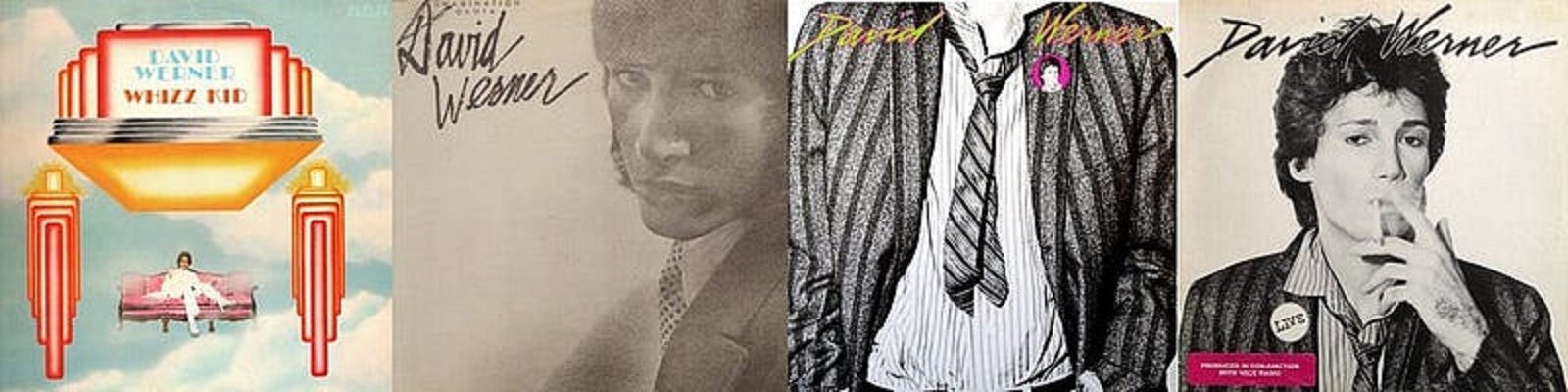
The four-album career of David Warner across two albums
for RCA Records and two albums for Epic Records.

Pittsburgh, Pennsylvania’s David Werner and New Haven, Connecticut’s future soul-revisionist crooner Michael Bolton were label mates at RCA Records when David, at the age of 17, issued his freshman and sophomore efforts in 1974 and 1975. (Bolton’s, then 22 and under his birth name of Bolotin, were issued in 1975 and 1976.)

Werner got his second spin at the wheels of Fate through a pair of promotional compilation albums issued by his next label, CBS/Epic, which included his new 1979 single, “What’s Right.” (There was a box of the albums tossed into the $1.00 cut-out section of the record store. We all bought one!)


Believing they had something with David Werner (they did: it’s a great, new wave-pop debut): CBS bankrolled a headlining tour. His opening act was an up-and-coming singer on the scene with her debut album, In the Heat of the Night (1979 on Chrysalis Records), featuring a nifty little rocker, “Heartbreaker.” There’s David Werner’s single, “What’s Right,” stalling on the chart in the upper 100s — and his opening act, Pat Benatar, has a song in the U.S “Top 30.”

While his recording contract with Epic Records was over: His career was just beginning.

Werner’s songwriting skills earned him a spot on the top of the charts with Billy Idol’s recording of “Cradle of Love,” on his fourth solo album, Charmed Life (1990). Signed to EMI Records with a publishing deal, David Werner continued to write and produce for other bands, such as successful blues and county music artists Mark Copely and Mary Fahl amid his 100-plus and climbing credits.

Below is the rare video—that I do not recall MTV ever spinning—for “What’s Right,” along with the two singles released from his debut album, Whizz Kid: the title cut and “The Ballad of Trixie Silver.”